Electronic Components Export from India: From Part Number to Buyer Approval
India's opportunity in electronic-component exports is growing, but the real opportunity sits at component level.
A PCB manufacturer, connector manufacturer, wire-harness supplier and capacitor manufacturer may all belong to the electronics sector, yet they sell to different buyers, work with different specifications and face different approval processes.
For an Indian exporter, the useful question is therefore:
Which exact component can we supply well, for which application, to which overseas buyer, with what technical proof?
India produced an estimated ₹13.11 lakh crore of electronics in FY 2025–26 and exported ₹4.24 lakh crore of electronic goods. These are overall electronics-sector figures, not electronic-component export figures. They show the scale of India's growing electronics manufacturing base.
Component manufacturing is also receiving specific attention. As of 17 August 2026, 106 applications covering 30 products across 15 states had been approved under the Electronics Components Manufacturing Scheme. The approved areas include printed circuit boards, passive components, electro-mechanical components, sub-assemblies, camera modules and optical transceivers. Thirty-eight approved plants had started manufacturing and another 16 were at advanced construction or machinery-installation stages. The investment and production numbers announced under the scheme are projected figures and should be read as planned capacity rather than completed production.
For Indian manufacturers, this creates a larger supply base. Export success still depends on matching the right component, specification, buyer and commercial requirement.
That is where Product Mastery begins.
India has a great vision: USD 2 Trillion by 2030.
Consult Kriba has our free WhatsApp community to support this mission: India 2030: USD 2 Trillion
It has dedicated sector-wise groups for:
Market intelligence
Policy updates
Exporter networking
To join the community, fill out this form:
https://www.consultkriba.com/india2030

Which electronic components offer export opportunities from India?
Electronic components cover several very different businesses. The best opportunity for a manufacturer comes from the component families where its actual production capability matches an overseas buyer requirement.
Printed circuit boards can include rigid, multilayer, HDI and application-specific boards.
PCB assemblies combine the bare PCB with approved electronic components, assembly, inspection, programming and testing.
Passive components include products such as capacitors, resistors and inductors.
Electro-mechanical products include connectors, switches, relays and similar parts.
Other opportunities include wire harnesses, sensors, modules, optical components, magnetics, sub-assemblies and specialised components used in automotive, industrial, telecom, power, medical and consumer-electronics applications.
The product name alone gives limited commercial direction.
For example, “multilayer PCB” becomes much more useful when the exporter can describe:
8-layer FR-4 rigid PCB → defined copper thickness → controlled impedance → ENIG surface finish → electrical testing → used in industrial control equipment.
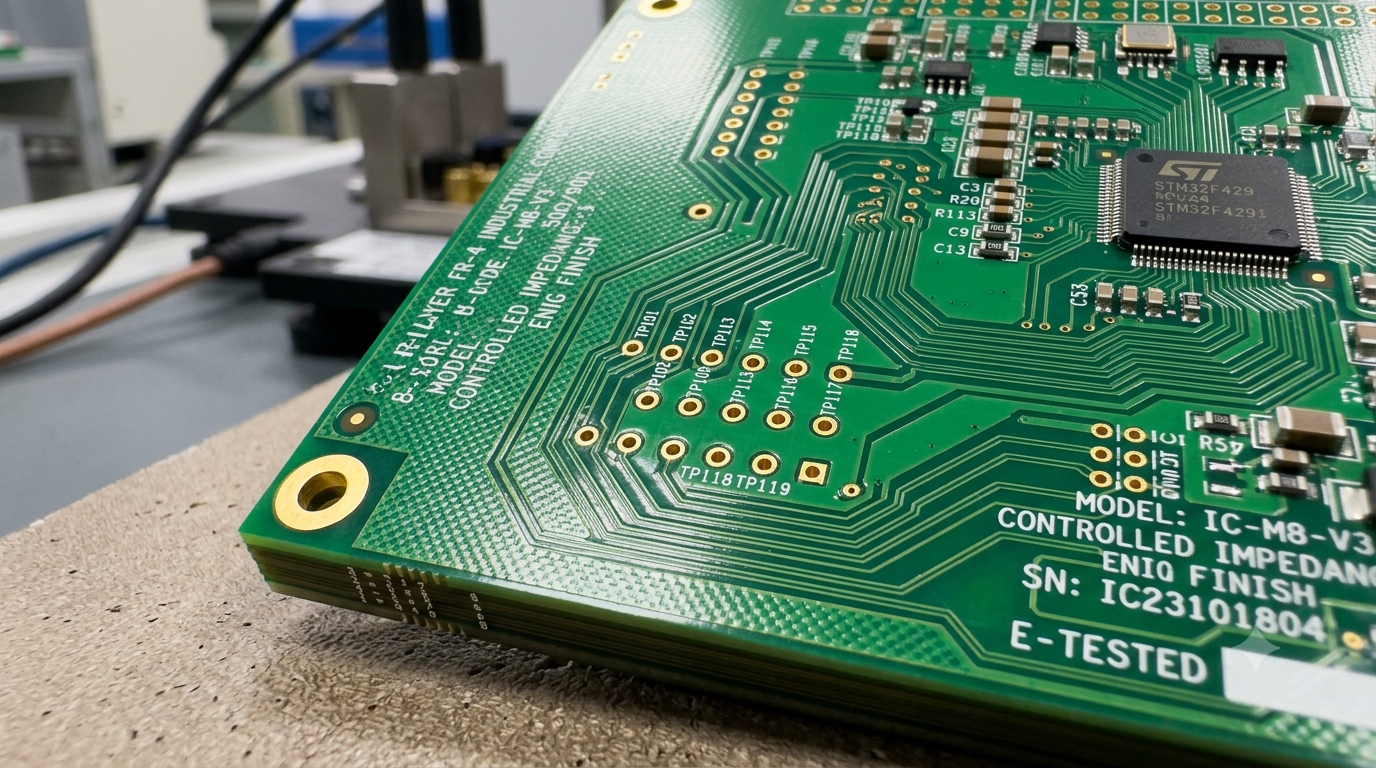
Now the manufacturer can identify relevant buyers, technical requirements, testing needs and quotation factors.
Consult Kriba's Product Mastery approach starts at this level: exact product, specification, application, buyer category, production capability, proof and the factors that change cost, quality or delivery.
Who buys electronic components from Indian suppliers?
The buyer depends on where the component enters the electronics supply chain.
An OEM, or Original Equipment Manufacturer, makes the finished equipment. Engineering, quality, procurement and supplier-development teams may all participate in approving a component and supplier.
An EMS, or Electronics Manufacturing Services company, manufactures electronic products for other companies. Its purchasing team may source against an approved BOM, or Bill of Materials, approved manufacturers and customer specifications.
A distributor can focus strongly on genuine source, stock availability, traceability, product range, delivery and regular availability.
A product-development company may need prototypes and low quantities first, followed by larger production quantities after testing.
An automotive Tier-1 supplier can have detailed qualification, traceability and change-control requirements.
This changes buyer search considerably.
“Electronics companies in Germany” is broad.
“German industrial automation manufacturers using multilayer PCBs in control equipment” is commercially useful.
“US product-development companies needing prototype PCB assemblies before regular production” is another buyer group.
“Automotive component manufacturers requiring qualified connectors for specified temperature conditions” is another.
The exporter can then identify the companies, relevant people and right business conversation instead of treating every electronics importer as the same buyer.
How does an electronics buyer approve a new supplier?
An electronics supplier can enter a buyer's business at several points: new product design, component selection, prototype development, supplier approval, additional-source development or regular production purchasing.
A typical journey can include:
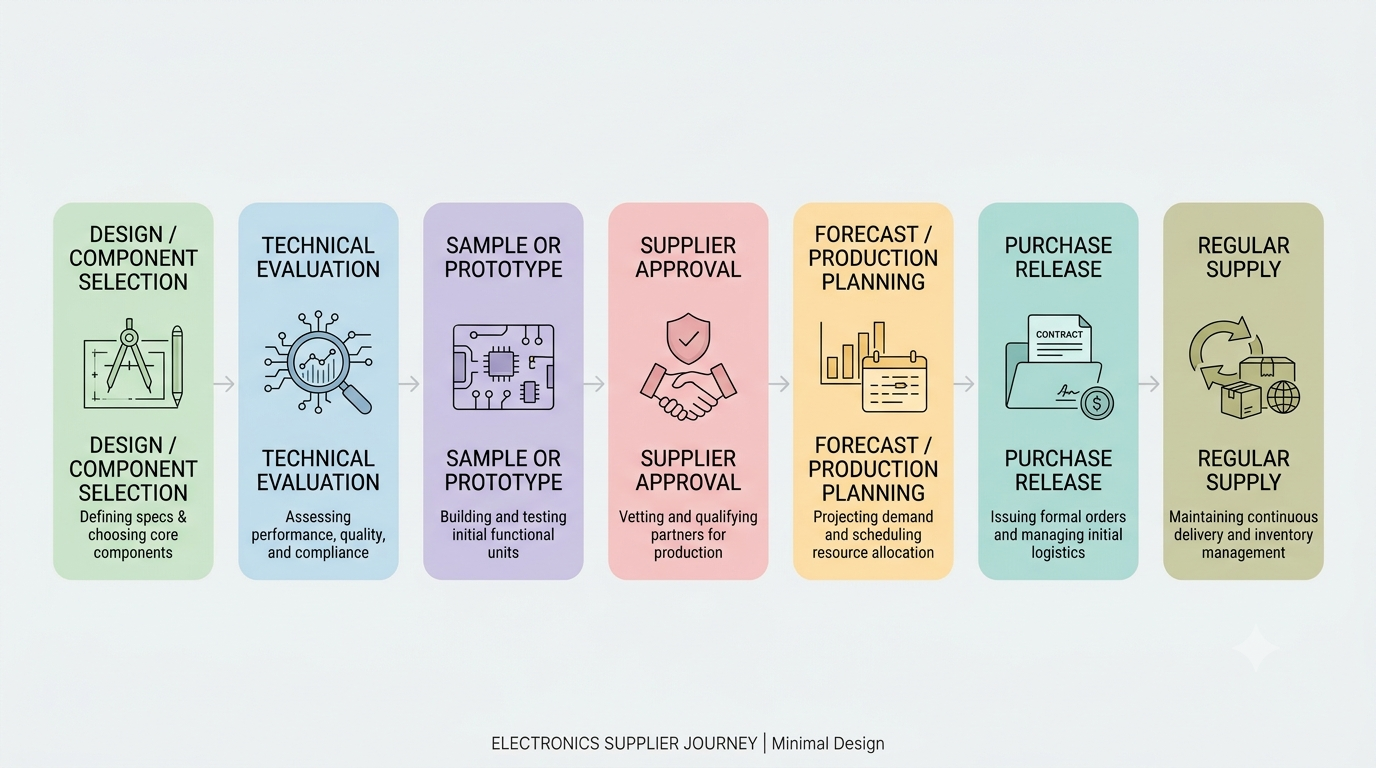
Design / Component Selection → Technical Evaluation → Sample or Prototype → Supplier Approval → Forecast / Production Planning → Purchase Release → Regular Supply
The exact order varies by company and application.
During design, engineering may decide the required performance and specifications.
During technical evaluation, the buyer may study drawings, datasheets, samples, process capability and test results.
During supplier approval, quality and procurement can check manufacturing systems, traceability, commercial capability and supply reliability.
Prototype quantities may then allow the buyer to test the part in its own product.
Once the product moves into regular manufacturing, forecasts and purchase releases become important.
ECIA industry material specifically covers the relationship between engineering and procurement, supplier selection and the management of an AVL, or Approved Vendor List. ECIA's standard electronics transactions also include the EDI 830 planning schedule for forecasts and material-release planning.
For an Indian supplier, the practical question is therefore:
At which stage can we enter this buyer's production process?
A company seeking a prototype supplier needs a different discussion from a company searching for an approved second source for regular production.
Which specifications should an exporter know before approaching a buyer?
The useful specifications are the ones that determine whether the component works in the buyer's application.
For a PCB, this can include material, layer count, copper thickness, board thickness, track and spacing, hole dimensions, via construction, impedance, surface finish and electrical-test requirements.
IPC-6012F covers qualification and performance requirements for rigid printed boards, while IPC-A-600 provides acceptability guidance for printed boards.
For a PCB assembly, the requirement can expand into BOM revision, approved component manufacturer, assembly process, inspection, programming and functional testing. IPC-A-610J covers electronic-assembly acceptability and J-STD-001J addresses requirements for soldered electrical and electronic assemblies.
For a connector, the deciding points may be pitch, contact count, current rating, voltage, contact material, plating, locking arrangement and mating cycles.
For a wire harness, wire specification, terminal, connector, pin arrangement, length and crimp requirement can define the product.
For a multilayer ceramic capacitor, capacitance, tolerance, voltage rating, dielectric, case size and temperature characteristic can affect the application.
For a sensor, measuring range, accuracy, response time, interface, calibration and operating temperature can matter.
The useful sales preparation is therefore:
Part → Specification → Application → Buyer Requirement → Technical Proof
That gives the exporter much better direction than an HS code and catalogue alone.
Why does temperature matter in electronic-component exports?
Temperature can decide whether a component suits the buyer's application.
Operating temperature is the range within which the component is designed to operate. Automotive electronics, outdoor telecom equipment, industrial controls, solar equipment and power electronics can require different ranges.
Storage temperature relates to permitted conditions before assembly or use.
For semiconductor devices, junction temperature refers to the temperature inside the semiconductor die and can affect thermal design.
For surface-mount components, reflow temperature becomes relevant during soldering.
Moisture-sensitive packages can also carry an MSL, or Moisture Sensitivity Level. The manufacturer's MSL guidance can define floor life after moisture-barrier packing is opened and the permitted handling before reflow.
Automotive applications can additionally require recognised component qualification. The Automotive Electronics Council maintains qualification specifications such as AEC-Q100 for integrated circuits and AEC-Q200 for passive components.
The exporter should therefore be able to answer a specific buyer question:
What operating, storage and assembly conditions has this exact component been designed or qualified for?
What is the difference between storage life and buyer date code?
Manufacturer-defined storage life and buyer date-code requirement are two separate matters.
Manufacturer-defined storage life explains how long and under what conditions the product can be stored according to the manufacturer's guidance.
Texas Instruments, for example, says semiconductor shelf life after delivery can depend on materials, manufacturing conditions, MSL, moisture-barrier packaging, desiccant and customer storage conditions. TI bases its minimum useful-life approach on delivery to the customer.
This makes stock control important. The exporter should retain the manufacturer part number, packing condition, lot information, MSL information where applicable and the manufacturer's storage guidance.
Buyer date-code requirement is the purchasing condition followed by a particular customer regarding the manufacturing date of the part.
ECIA maintains industry guidance on date-code restrictions because buyer purchasing policies and the technical condition of properly stored components are separate issues.
For an Indian exporter holding stock, both questions matter:
Is this stock within the manufacturer's storage conditions?
and
Does it meet this buyer's accepted date-code condition?
Checking this before confirming availability can prevent unnecessary quotation and supply problems later.
What determines electronic-component lead time?
Lead time can be controlled by one critical material or one buyer-approved component.
Consider a PCB assembly containing 120 electronic components.
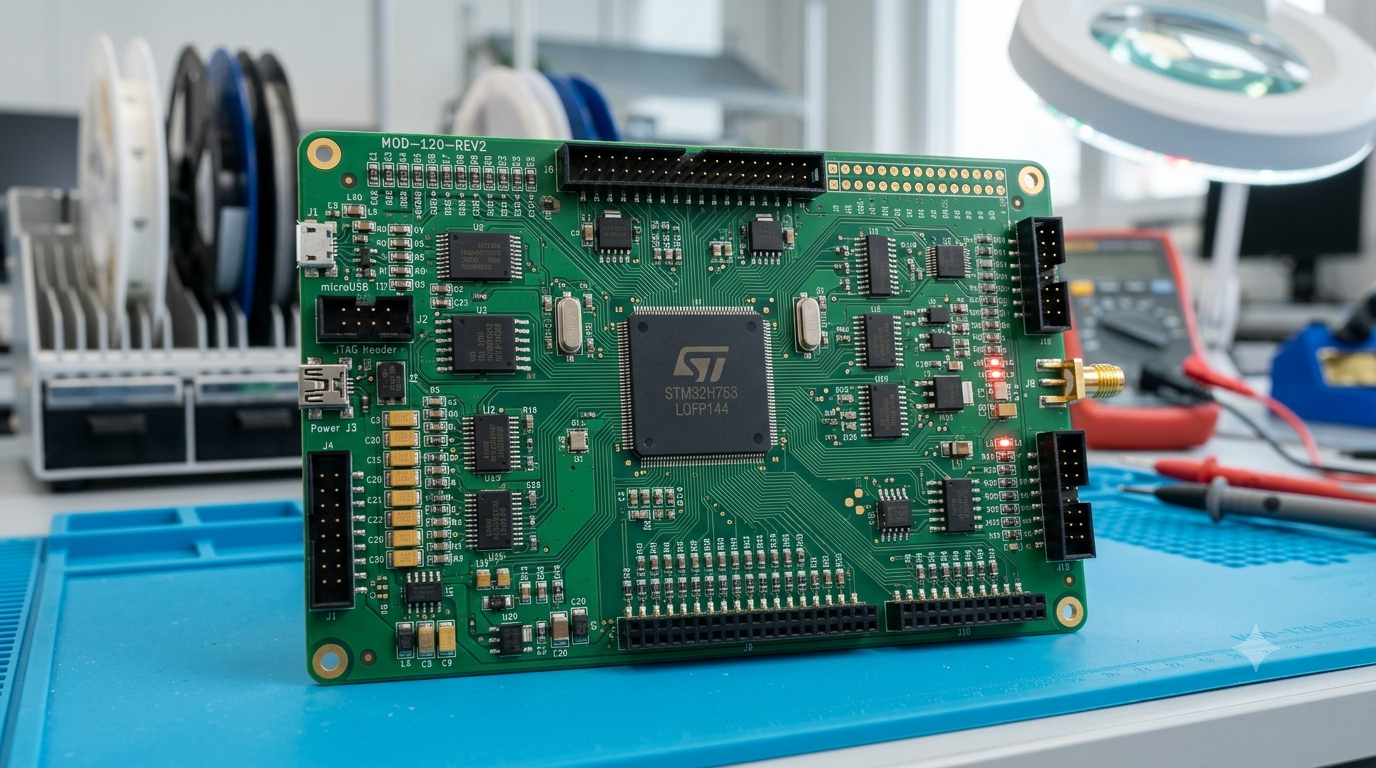
Most parts may be available within three weeks.
One approved IC may require 18 weeks.
When available stock or an approved alternative is unavailable, that IC can determine when the entire assembly can be completed.
ECIA explains that semiconductor manufacturing cycle times can range from around 12 weeks to more than six months depending on wafer fabrication, backend processing and other production factors. Final assembly and testing can add around four to eight weeks.
This is why a PCB assembly exporter should understand the BOM before committing a delivery date.
The useful questions become:
Which parts have long lead times? Which parts come from one approved source? Which alternatives are already approved? How much forecast visibility does production need?
A buyer's forecast then becomes commercially valuable.
A six-month forecast can allow material planning much earlier than a purchase order received a few weeks before production.
Where is India building electronic-component manufacturing capacity?
India's component manufacturing is expanding through several states and product categories, supported by the Electronics Components Manufacturing Scheme and existing electronics clusters.
The current ECMS approvals cover 15 states and include PCBs, passive components, electro-mechanical products, sub-assemblies, optical transceivers and related manufacturing inputs and equipment.
For an exporter, the value of a manufacturing cluster is access to suppliers, engineering skills, testing, supporting industries and production capacity.
The next step is supplier-level checking.
A PCB sourcing company, for example, should confirm the factory's actual layer capability, board materials, process limits, testing, current capacity, prototype lead time and production lead time.
The same principle applies to connectors, capacitors, harnesses and electronic assemblies.
A state or cluster can tell you where capability is developing.
The factory tells you what you can actually promise to the buyer.
Which overseas markets currently buy PCBs from India?
Product-level trade data gives a much clearer export picture than overall electronics statistics.
For printed circuits under HS 853400, India reported exports worth about US$125.3 million in 2024. The United States accounted for about US$30.1 million, Austria US$26.1 million, France US$10.4 million, the UAE US$8.6 million and the Netherlands US$8.3 million.
This gives an Indian PCB manufacturer a starting market map.
The next step is to go deeper.
A company producing prototypes and low-volume multilayer boards will have a different buyer opportunity from a factory built for very high-volume production.
A manufacturer serving industrial electronics may need different proof from one targeting automotive applications.
The HS code shows the trade flow.
Specification + application + buyer category show the sales opportunity.
Does the market picture change for another electronic component?
Yes, significantly.
Take multilayer ceramic fixed capacitors under HS 853224.
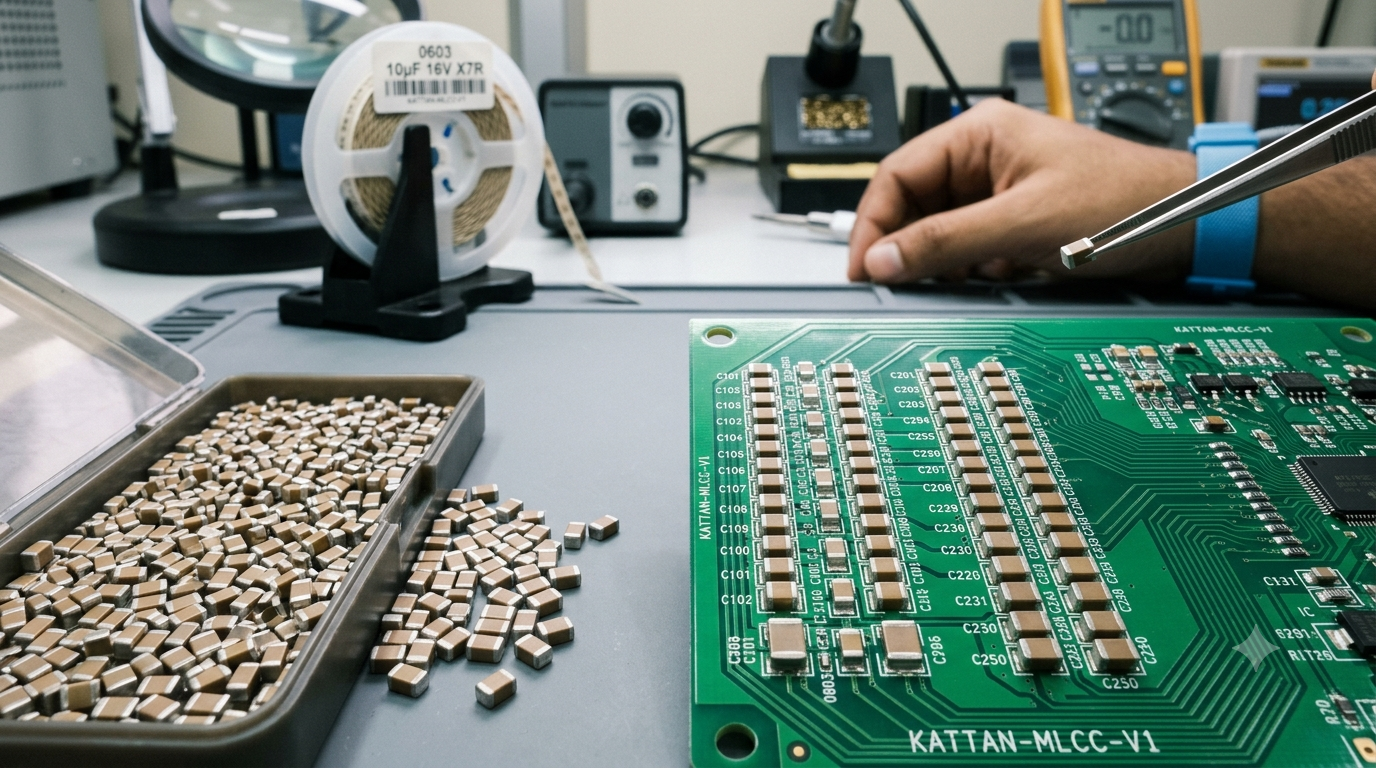
India reported exports of about US$2.26 million in 2024 under this heading. India also reported imports of about US$322.6 million, with China and Japan as the two largest sources.
That creates a different business question from the PCB example.
For PCBs, Indian exporters can study markets where Indian supply is already clearly visible.
For multilayer ceramic capacitors, the wider import dependence creates questions around India's actual manufacturing capability, scale, specification range, qualification, cost and application fit.
It would be premature to treat the import value itself as an export opportunity.
The practical research question is:
Which specifications can an Indian manufacturer produce competitively, and which overseas applications and buyers match that capability?
This is why “electronic components market” is too broad for serious export planning.
Every component family can have a different market, buyer and competitive position.
What quality proof do overseas electronics buyers expect?
Electronics buyers can assess a supplier more easily when every important specification has supporting proof.
For a PCB manufacturer, proof can include controlled drawings, material specifications, dimensional inspection, electrical testing and traceability.
For PCB assemblies, it can include controlled BOMs, component traceability, inspection, programming and functional-test records.
For harnesses and connectors, relevant proof can include continuity, crimp, pull-force, dimensional, material and plating checks according to buyer specifications.
India also has technical testing support through STQC. Its component-testing facilities cover active and passive components, integrated circuits, electro-mechanical products, optoelectronics, PCBs and laminates. STQC lists component-testing facilities in Jaipur, Pune, Delhi and Thiruvananthapuram.
The strongest quality presentation is simple:
Here is the buyer's requirement. Here is how we control it. Here is the evidence.
For a technical buyer, that carries more value than a general claim of “international quality”.
What affects an electronic-component export quotation?
An electronics quotation should begin with the exact technical requirement because small specification changes can create large cost changes.
A PCB quotation can change with laminate, layer count, copper weight, board size, panel utilisation, drilling complexity, impedance control, surface finish, testing, yield and order quantity.
A PCB assembly adds component cost, approved component makes, availability, assembly complexity, programming and testing.
Connector pricing can change with copper alloy, engineering plastic, plating, tooling and quantity.
Wire-harness pricing can move with wire, terminals, connectors, crimping, testing and labour.
Imported inputs can also expose the Indian manufacturer to foreign-exchange movement.
Prototype work may carry NRE, or Non-Recurring Engineering, such as one-time engineering, programming, setup, tooling or test-fixture cost.
Urgent production, air freight, rework risk, rejection risk and payment terms can further change the commercial position.
A useful quotation therefore connects:
Specification → Revision → Quantity → Annual Forecast → Materials → Testing → Tooling/NRE → Lead Time → Delivery → Payment Terms
For Indian manufacturers, this can also improve negotiation. The buyer can see which part of the price comes from volume, material, technical requirement or one-time development cost.
Which standards and compliance requirements should Indian exporters check?
The exact component, application and destination decide the requirement.
IPC standards can form part of the technical specification for PCBs and electronic assemblies. They should be treated as applicable industry or buyer standards, not as one universal export certificate.
Automotive buyers may use AEC component-qualification requirements according to the component category.
For the European Union, the RoHS Directive currently restricts ten substances in electrical and electronic equipment. Buyers managing their finished-product compliance may therefore request material declarations or supporting evidence from component suppliers.
CE marking applies when the actual product falls within the relevant EU legislation requiring CE marking. The European Commission specifically bases CE obligations on the product and applicable legislation, so the exporter should establish product scope before preparing conformity documentation.
Advanced or dual-use electronics should also be screened against the current DGFT SCOMET list, because specified electronic systems, components and integrated circuits can fall under export-control provisions depending on their technical parameters.
For an exporter, the order of work is:
Exact component → Exact application → Destination country → Buyer requirement → Applicable standard or regulation
That gives a much safer basis for quotation and market entry.
Where can Indian electronic-component exporters get technical and market support?
Several Indian organisations can support different parts of the journey.
The Electronics and Computer Software Export Promotion Council, or ESC, supports electronics and ICT exports through exhibitions, buyer-seller activity, delegations and international market development.
ELCINA represents the Indian electronics hardware and component industry and works across the electronics manufacturing value chain with government, industry and technical institutions.
STQC provides component, electronics, environmental and reliability testing facilities.
These organisations can help with information, testing, industry connections and market activity.
The exporter still needs to convert that support into a business-specific sales direction.
What can make an Indian electronic-component supplier attractive to an overseas buyer?
The strongest reason should come from a capability already present in the business.
A manufacturer built for efficient volume production may compete through competitive pricing, stable production and yield control.
A supplier serving demanding applications may build its position through certifications, testing and quality capability, backed by process control and traceability.
A PCB, harness, connector or assembly manufacturer may win through customisation, prototypes, flexible quantity and engineering support.
A manufacturer or distributor with several related component families may create value through range of products, provided source, specification, traceability and repeat availability are clear.
These four directions align with the Product Mastery approach used in RSM: understand the actual strength of the supplier before deciding which market and buyer to pursue.
The question is therefore less about “What USP should we write on our website?”
A better question is:
What can this factory repeatedly do that matters to this buyer?
How should an Indian electronics exporter prepare before finding overseas buyers?
Buyer search becomes much more productive after the exporter can answer the commercial questions around the component.
Before starting a focused buyer search, check:
What exact component or part number are we offering, and what is the correct HS classification?
Which application uses it, and which specification decides suitability?
Which type of buyer uses this component: OEM, EMS, distributor, Tier-1 supplier or product-development company?
Who is involved in technical and commercial approval?
What operating, storage, assembly or MSL conditions apply?
What storage guidance does the manufacturer provide, and what date-code condition does the buyer follow?
Which material or component can control delivery time?
What prototype, monthly and annual quantity can the factory support?
What technical proof can we provide: drawings, test reports, traceability, quality systems, samples or process capability?
Which countries currently trade this exact component category, and which supplier countries compete there?
What changes the quotation: specification, quantity, raw material, approved source, tooling, testing, forex, freight or payment terms?
Is our strongest reason to win pricing, certification/quality capability, customisation or product range?
This follows the current Reverse Sourcing Method principle: do the important preparation before connecting with buyers, so the buyer opportunity can be used for selling.
Frequently Asked Questions
Can India export electronic components competitively?
Yes. India already has a large electronics manufacturing base and electronic-component capacity is expanding. Competitiveness depends on the exact component, production scale, specification, quality proof, delivery capability and buyer requirement. Overall electronics growth should therefore be converted into product-level analysis before selecting an export market.
Which electronic components can be exported from India?
India manufactures and supplies several component families including PCBs, passive components, electro-mechanical components, assemblies, optical components and related products. The right export product depends on the factory's actual technical and commercial capability.
Who should an electronic-component exporter contact in an overseas company?
The relevant person depends on the buying stage. Engineering or component engineering may influence technical approval, quality teams can evaluate process and proof, and procurement or purchasing handles the commercial sourcing process. In EMS and OEM businesses, several functions can participate in the final supplier decision.
Do all electronic components exported to Europe need CE marking?
CE marking applies when the product falls within EU legislation that requires it. The exporter should identify the exact product and applicable legislation before deciding the conformity route.
What is the difference between component date code and shelf life?
A date code identifies manufacturing timing according to the manufacturer's coding system. Storage life is governed by the manufacturer's product, packing and storage guidance. Buyers may also set their own acceptable date-code conditions for purchasing.
Why can a PCB assembly have a long lead time?
A PCB assembly depends on every required component in its BOM. One long-lead buyer-approved IC can control the complete assembly schedule when suitable stock or an approved alternative is unavailable. Semiconductor manufacturing itself can take several months.
From Electronic Component to Export Sales Opportunity
An electronic component can enter an overseas company long before the first regular purchase order.
It may begin with a design requirement.
Then comes technical evaluation.
A sample may lead to approval.
Approval can lead to forecasting.
Forecasting can lead to regular purchasing.
For the Indian exporter, this creates a much stronger way to look at buyer finding:
Part → Application → Specification → Buyer → Production Cycle → Technical Proof → Commercial Fit
Trade data can tell you which countries buy.
A database can show companies.
LinkedIn can help identify people.
A trade fair can create introductions.
Product Mastery tells you which buyer is relevant, what that buyer may require and what you should be ready to discuss when the connection happens.
That is the role of Product Mastery inside Consult Kriba's Reverse Sourcing Method. RSM prepares the product, market, buyer, compliance and commercial understanding before buyer connection, then uses the connection for requirement, follow-up, quotation, negotiation and export sales.
If you manufacture or export electronic components and want to build this into a structured export sales process, the next step is Consult Kriba's 3-Day Export Sales Process Workshop:
Register here: https://www.consultkriba.com/2tnexports
